Here is the thing most people miss about the San Gabriel Valley. The famous houses are not the point. They are the source code. A few architects worked out a way of building that fit this place, the light, the foothills, the slower life, and then that way of building spread to every corner of the valley, scaled up into estates and scaled down into starter bungalows that a teacher or a machinist could afford.
So the Gamble House and a twelve-hundred-square-foot bungalow in Monrovia are speaking the same language. Same grammar of the porch, the eave, the honest joint. One was signed by a master. The other was framed by a carpenter working from a fifty-cent print. Both belong to the valley, and both have good bones.
This page is about the people who drew the first ones. Some of them are famous. Most of them never signed a thing. Together they are the backbone of the place, and understanding them is the fastest way to understand why a street in Sierra Madre or Alhambra feels the way it does.
The Named Hands
Four architects who set the vocabulary the rest of the valley still speaks. The drawings here are interpretive renderings, made to honor each one's way of working.
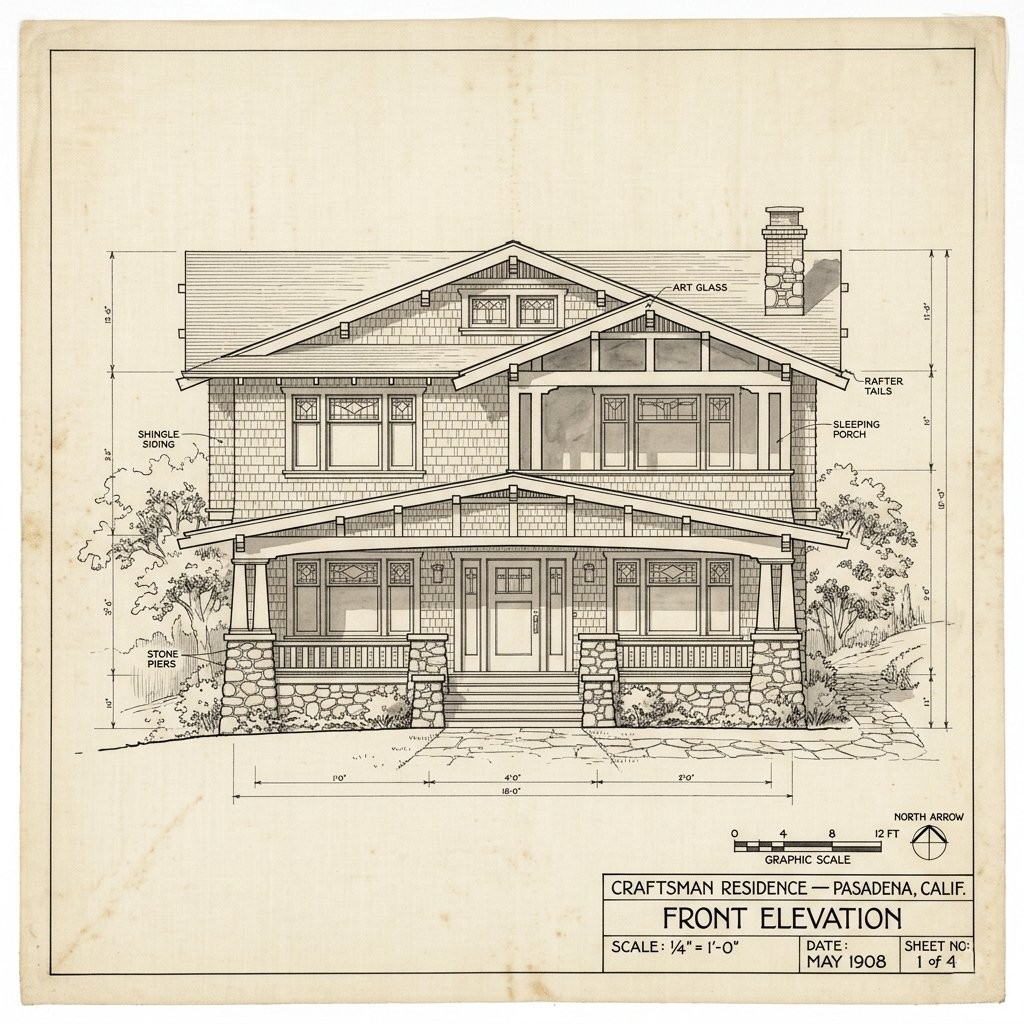
Greene & Greene
The CraftsmanCharles and Henry Greene perfected the California bungalow and the "ultimate bungalow," crowned by their 1908 Gamble House in Pasadena. Low gables, deep sheltering eaves, exposed joinery treated like furniture, river-rock and shingle, art glass that turned morning light gold. Arroyo Terrace alone holds nine of their houses, including Charles Greene's own.
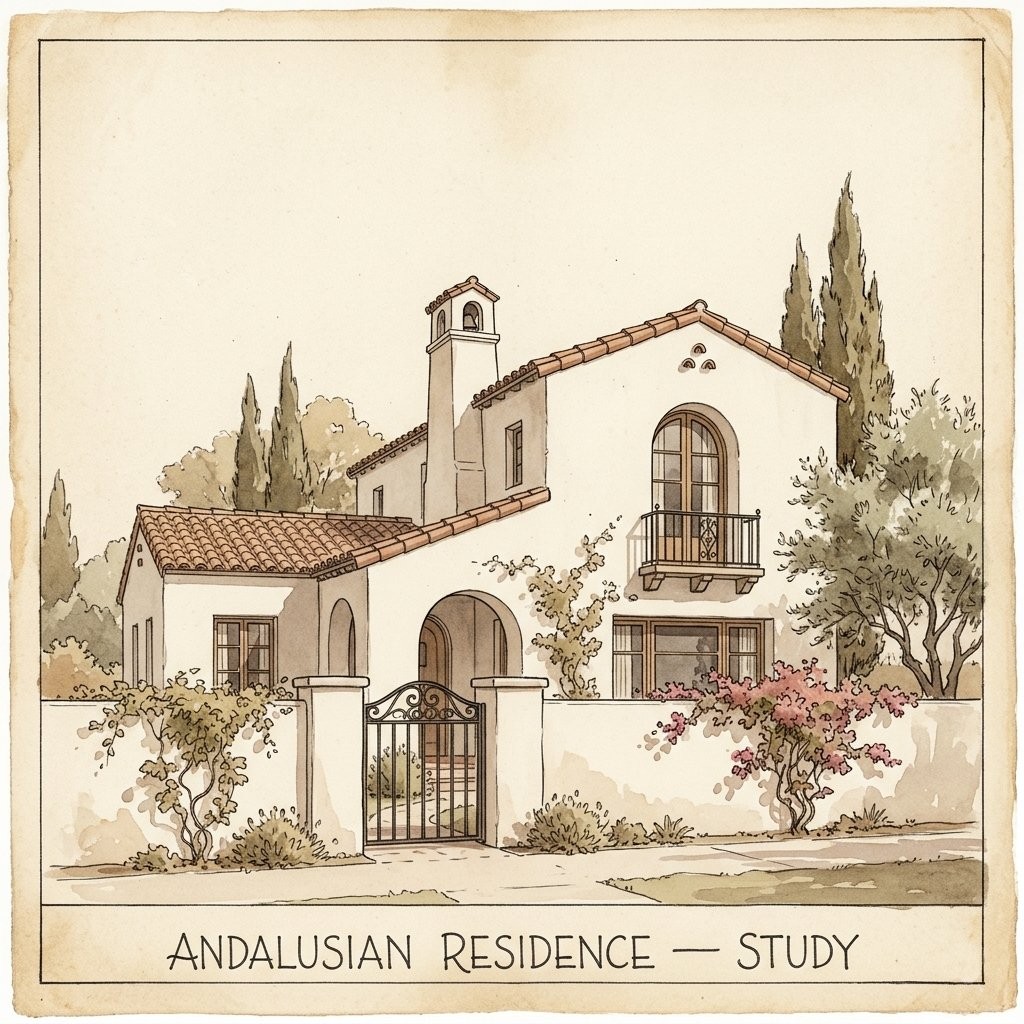
Wallace Neff
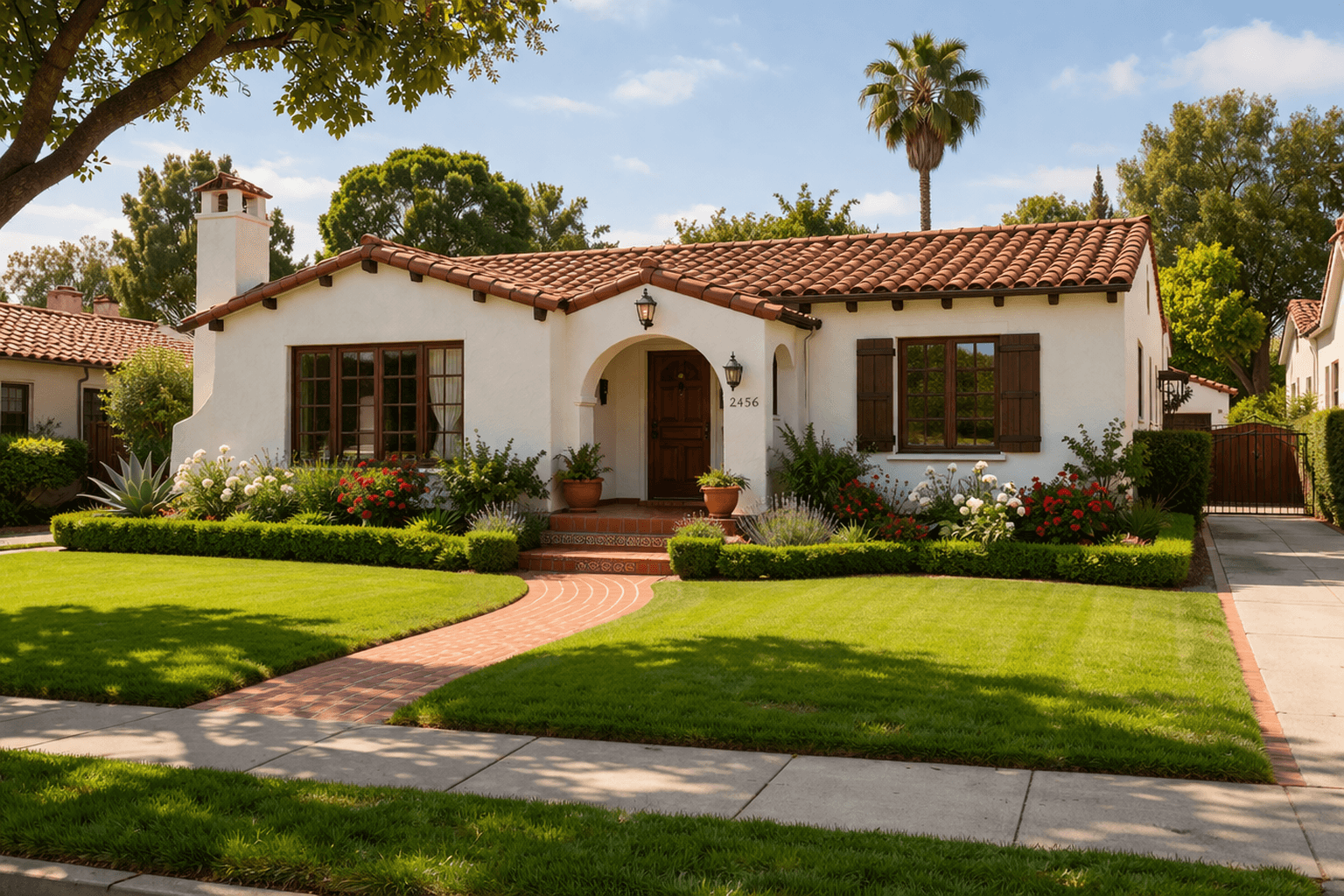
Spanish & Mediterranean RevivalPasadena's own, and the man who gave California its accent. Neff designed for Hollywood royalty, Pickfair among them, and earned the title "architect to the stars." But the same hand also invented low-cost "Bubble Houses" meant for rapid, affordable construction. He worked both ends of the ladder, which is exactly the point.
The valley kept them.
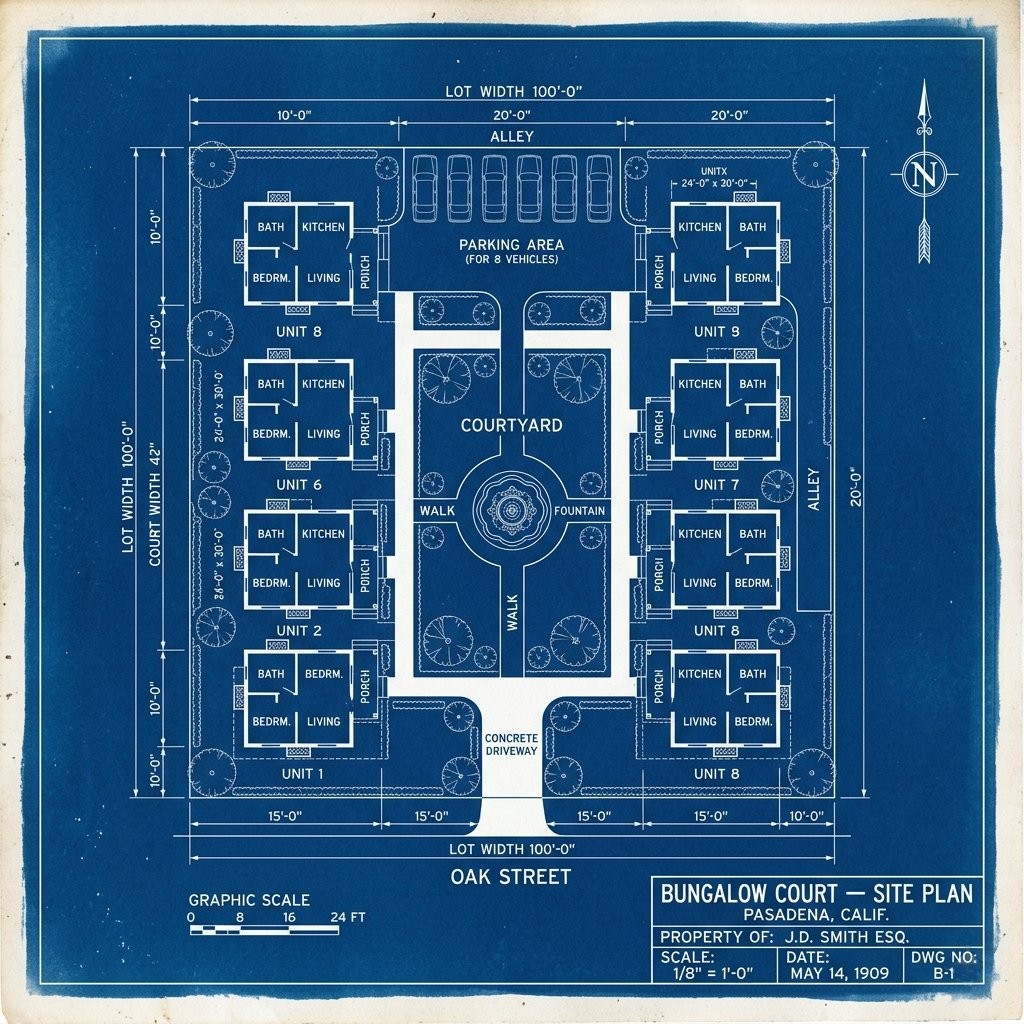
Sylvanus Marston
The Bungalow CourtIn 1909 Marston drew St. Francis Court in Pasadena, the first bungalow court in America: small individual homes arranged around a shared garden. It was the original answer to living well on a modest lot, communal and private at once, and it became a template copied across Southern California.
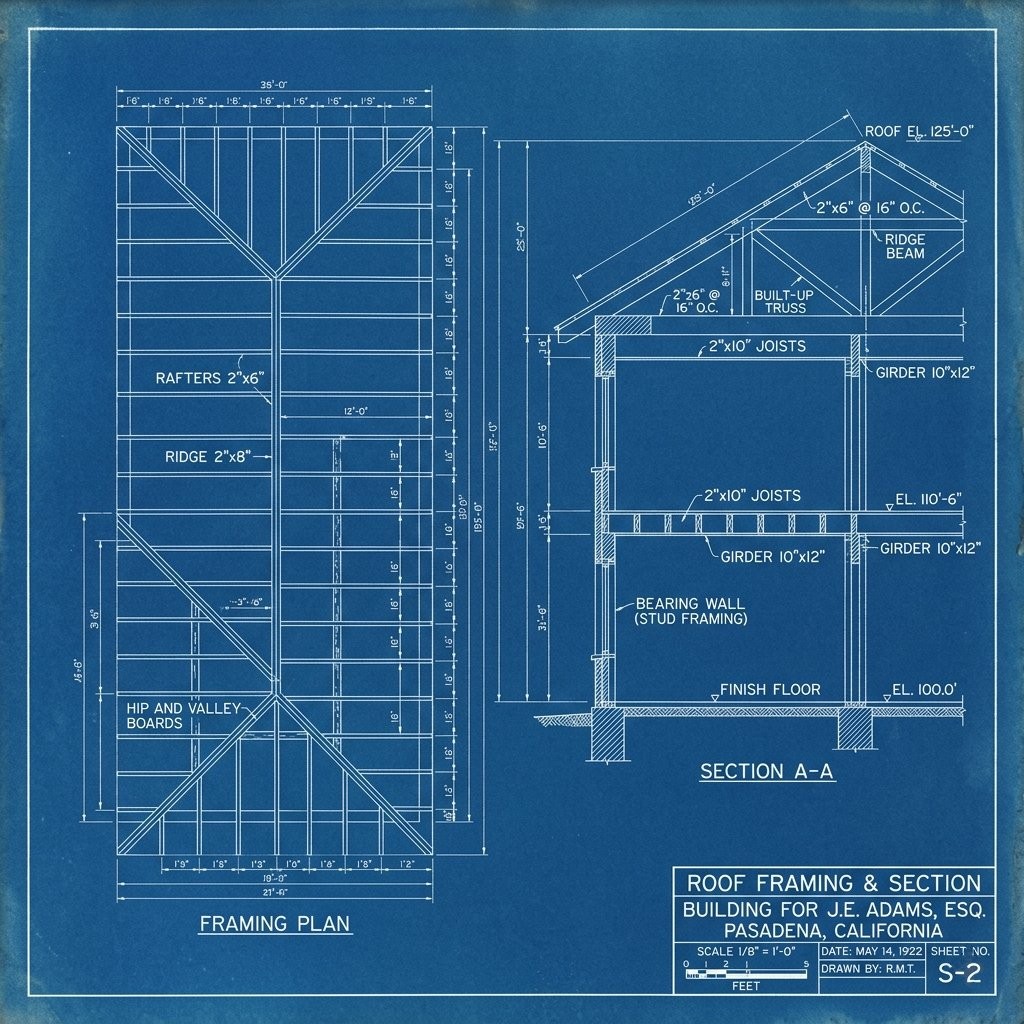
Myron Hunt
The Civic BackboneIf Greene and Greene drew the houses, Hunt drew the landmarks. The Rose Bowl, the Pasadena Central Library, buildings at Caltech and Occidental, and the Huntington itself. His work is the part of the valley that belongs to everyone, no gate, no asking price.
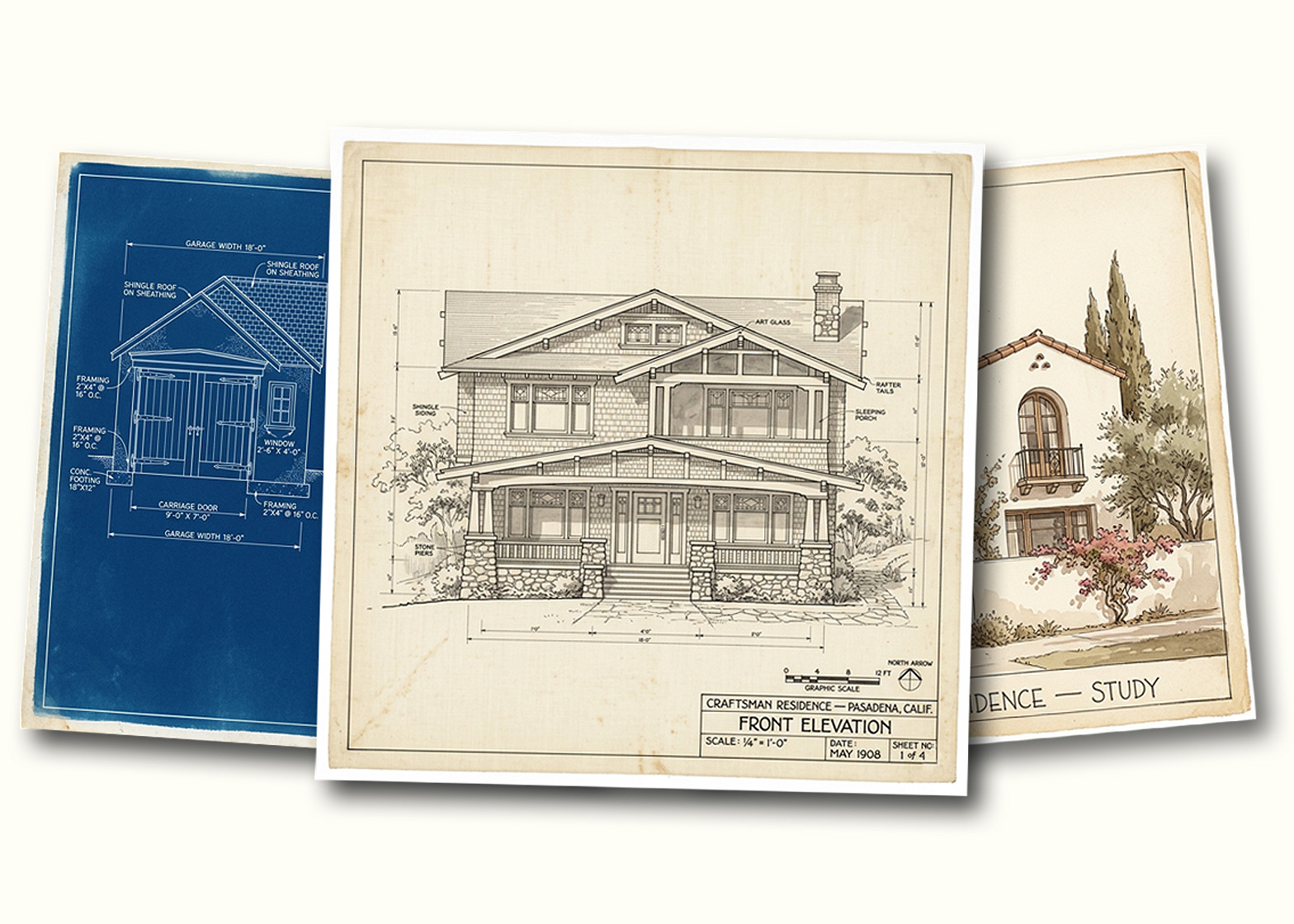
Three Hands, Three Papers
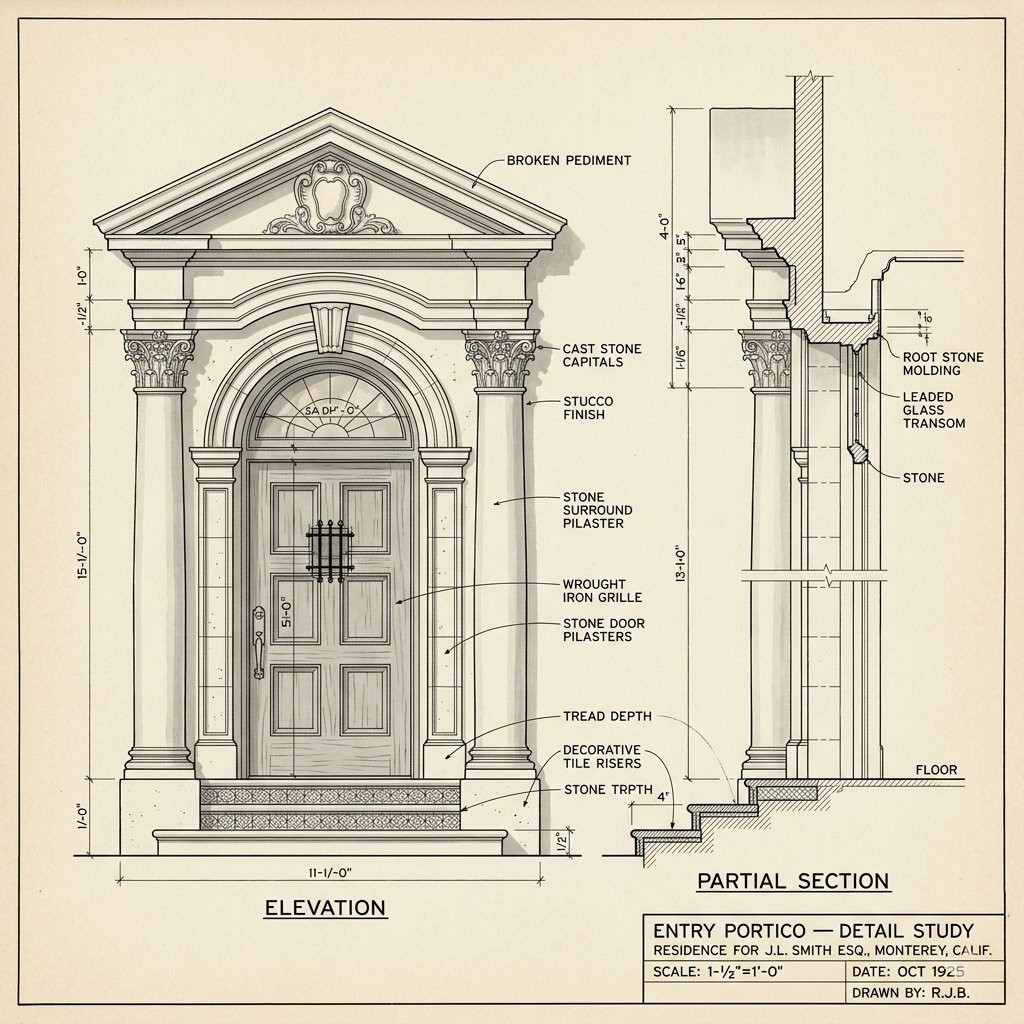
Ink on linen
The original, drawn by hand in India ink on linen tracing cloth or vellum. One of a kind, durable, and precise down to the rafter tail. This was the drawing the architect actually made.
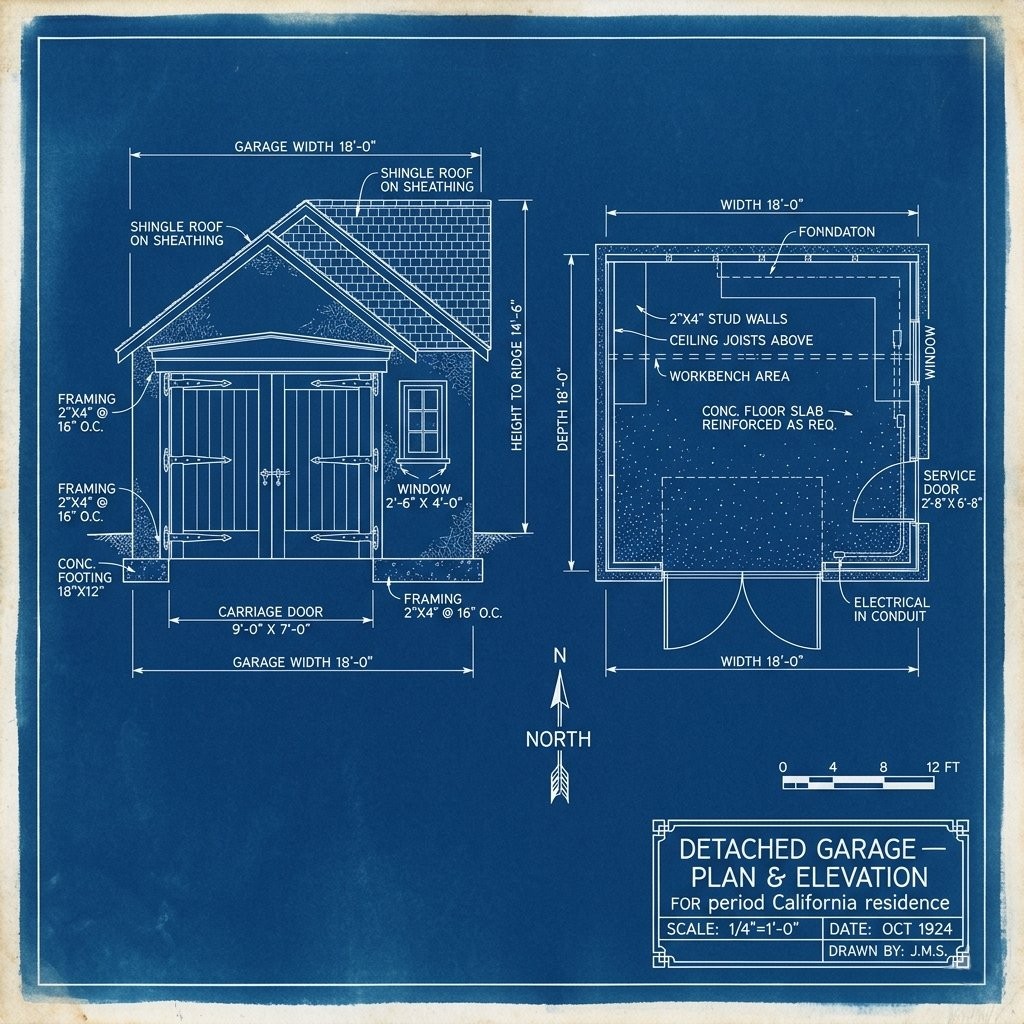
The cyanotype blueprint
To build it, you needed copies, cheap ones. The cyanotype, white lines on Prussian blue, cost roughly a tenth of a hand-traced reproduction by the 1890s. That economy is the whole story: it let the man with the hammer read the plan as clearly as the man who drew it. Even a detached garage got a full working drawing.
The watercolor rendering
Then there was the version made to sell the vision: a watercolor or ink-wash rendering, washes of color laid over precise linework, the way the finished house would feel on a warm afternoon. The Neff rendering above is exactly this kind of drawing.
That is the valley's quiet secret. The care went all the way down. Even the garage got a real drawing. It is why a hundred-year-old cottage here can still feel more solid than something built last year.
The Anonymous Hands
Most of the valley was never signed. Speculative builders and pattern-book carpenters put up the everyday bungalows that give whole towns their character, working from those cheap blue prints. No famous name. Full of good bones.
Monrovia is the best example. The fourth-oldest city in Los Angeles County, with one of the most active preservation communities in the region and an annual historic homes tour, its streets are lined with Craftsman, American Foursquare, Victorian, and Spanish Revival homes, most built without a celebrated architect attached. The character is in the building, not the byline. The same is true in pockets of the foothill and eastern valley towns that have never had a spotlight turned on them. That is open ground, and it is exactly where character and value still meet.
"Some of these hands signed their work. Most of them didn't. The valley is their monument either way."
Explore the Valley
Nominate Your Town
The valley is bigger than any one map, and a lot of its best architecture sits in towns that have never had a spotlight. If your town or neighborhood has a pocket of character homes worth featuring, tell me about it. I am expanding where Arroyo Casa works, one neighborhood at a time, and the best leads come from the people who live there.
Send me the town. Tell me what makes it special. I will go take a look.
Nominate Your TownLooking for a Home with Good Bones?
Arroyo Casa knows the architecture of this valley street by street, from a Greene & Greene pedigree to an unsigned bungalow with a Batchelder hearth. If you want a home with real character, let's find the one that was built to last.
Get in Touch